




When CSR looked upon as alternative to aid flows instead of taking up PPP…

MODERN society is in part built upon a principle of charity, first at an individual level chiefly as extended families and then at a principle of international cooperation.
Either way, at times abusive relationships arise when some individuals take charity as a right or an obligation on the part of a relative.
Much the same could happen with countries, when rulers feel that they could safely draw up plans and give them to international organisations or private companies for funding – courtesy of the principle of charity.
This was by and large the case with some countries for most of the post-independence period, but the rescinding of multilateral systems has put the issue on balance, demanding new methods by doing business, but then old habits die hard.
That is why policy makers need to take note of the fact that the level to project financing that local government administrators expect on private sector projects need to be measured.
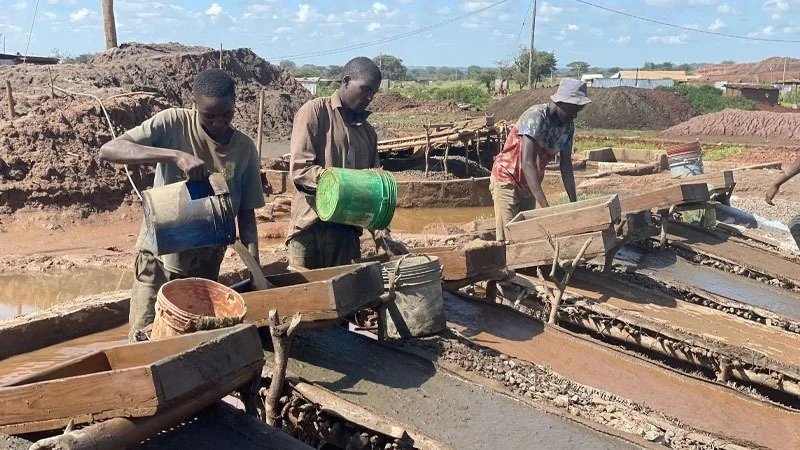
That should apply, instead of raising expectations that all sorts of schools or health centres, complete with their construction and equipping, will be assured so long as there is some mining or other company nearby.
At times the question comes up if these projects were brought up because of the presence of those investing companies and, if not, why the “burdens” appear to be forced on to those firms.
Were it that the investing companies funded books, mattresses, meals for primary school pupils and perhaps uniforms for children from needy families, it would indeed qualify as charity. But not on issues like digging foundations in preparation for the construction of classrooms, where local residents could do the work to satisfaction with little outside support or wholly on self-help basis.
Some public officials might see corporate social responsibility (CSR) as charity, regulating it as taxation, which would stifle a number of investment projects silently.
In the case of disputes over land ownership and use pitting local residents (“original owners”) against investors, the crucial issue is that there is a major difference between selling land at a price one agrees, and being compensated at a rate the government decides when it hands the land to a company to start investment or development.
That often sets the stage for disputes over residual rights over what the company obtains, a negative environment, this.
When it comes to massive projects like natural gas plants, it is possible to imagine how administrators will calculate royalties presented as CSR, and not surprisingly the project could easily fail to take off.
Even in times of crisis, we need to get our act right, before other countries can step in and we end up finding the expected development of our coal, iron, gas and other major natural resources rapidly shelved.
Top Headlines
Trending Stories













© 2026 IPPMEDIA.COM. ALL RIGHTS RESERVED