




It is Africa, not the World Bank, that needs an effective African industrialisation vision

THERE have been suggestions that the World Bank lacks a strategy for industrial development in Africa – which might first be true not true, though the bigger issue could be that it is beside the point.
It is contradicted by a dictum held back in January 1981 by none other than founding President Mwalimu JK Nyerere that ‘the International Monetary Fund is not an international ministry of finance’.
Accordingly, going by Tanzania’s Father of the Nation, IMF thus just could not dictate policy to African countries, or those it was asked to assist with loans, as members of the United Nations and of the IMF itself.
It would be much the same for the World Bank when it came to issues relating to African industrialisation, as that just would not be in its brief.
That would not be to imply that the World Bank doesn’t lend for industrial projects in Africa, though, but only that it lends to projects coming from Africa with a view to boosting industrialisation in the continent.
Two issues arise there which similarly occasion the debate, namely, that Africa has always had industrial projects of some kind – at times systematic blueprints like the 1975 basic industries strategy in our own country.
However, but that the continent scarcely had the resources – nor indeed the framework – for actual take-off.
Rather, it was nailed down in a cycle of import dependency and lack of foreign exchange rolled into one issue, needing imported inputs or machine parts and even raw materials and dependent on export crops with sliding prices.
There is a considerable number of industries in Africa where merchants seeking to produce cheaper goods in the local market and increasingly in regional markets have found the necessary financing and set up factories.
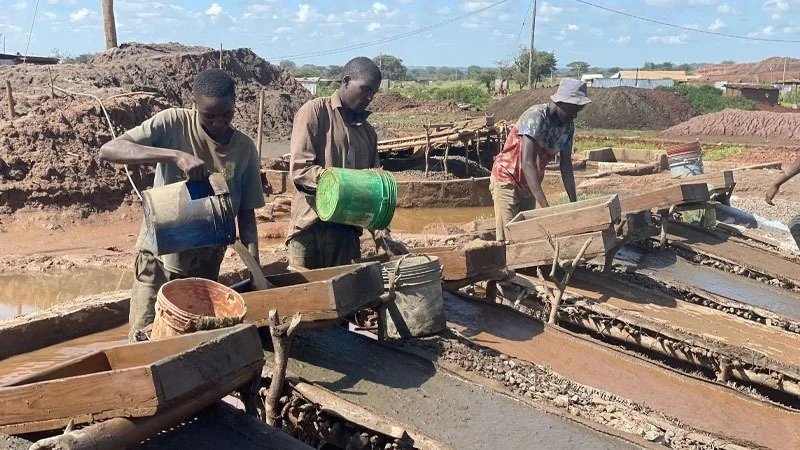
Otherwise, there is more of crop processing and, increasingly, basic consumer goods, all adding up to industries but apparently not to the sort of industrialisation strategy that critics say the World Bank lacks.
More realistically, it was a dreamy sort of industries where most youths would for long wake up in the morning, take to bus stops and go to work – adversely affected by large-scale automation.
Artificial intelligence is just doing the mopping up, with most work so eased such that firms widen activities even with lean workforces.
Yet there is still a case for industrialisation even in the face of cheap imports as life can be easier with those goods, but each country has to keep its population busy enough to avoid social breakdown.
Those dissatisfied with present-day structures could elect to seek solutions in protest, this possibly inducing cycles of opposition – but this making little difference.
Still, Africa will industrialise as it has the fastest growing market while idle capital goes into the development of real estate. To grow its money further, though, the continent would still have to move to industry – with the wastage notably high.
Top Headlines
Trending Stories













© 2026 IPPMEDIA.COM. ALL RIGHTS RESERVED