




MNH-Mloganzila enriches modern skin grafting, reconstructive surgery services
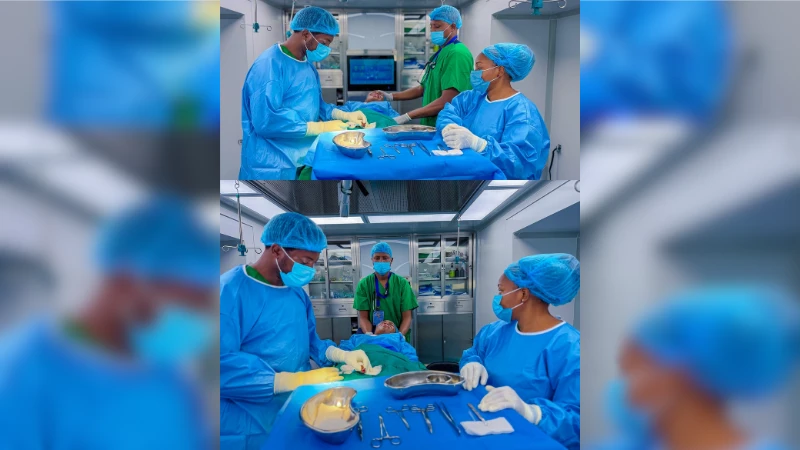
MUHIMBILI National Hospital (MNH)–Mloganzila has announced significant improvements in its reconstructive surgery services, including the expansion of modern skin grafting procedures designed to treat patients suffering from severe trauma such as burns, road traffic accidents, diabetes-related complications, and chronic wounds.
The hospital said the upgraded services at its reconstructive surgery department are intended to accelerate healing for patients with extensive tissue damage, reduce recovery time, and improve overall quality of life for individuals living with disfiguring injuries and long-term wounds.
Speaking yesterday at the 50th Dar es Salaam International Trade Fair (Sabasaba), MNH–Mloganzila reconstructive surgery specialist Dr David Antanamsu explained that the facility now employs a range of advanced surgical techniques tailored to the complexity and severity of different wound cases.
He said skin grafting remains one of the key procedures used, involving the harvesting of a thin layer of healthy skin from a donor site on the patient’s body and transplanting it onto the damaged area. According to him, the donor site typically heals within about two weeks, while the grafted area gradually integrates to restore skin function and appearance.
Dr Antanamsu noted that the service is particularly beneficial to patients with large or complex wounds resulting from vehicle accidents, severe burns, diabetic ulcers, pressure sores from prolonged hospitalisation, and other forms of trauma that do not heal through conventional treatment methods.
He further explained that for complex injuries located on sensitive or highly mobile areas such as the face, head, and joints, the hospital uses a technique known as tissue expansion. This method gradually stretches surrounding healthy skin to create enough coverage for the affected area, allowing for a more natural reconstruction outcome.
In other cases involving extensive open wounds, specialists employ flap and skin transfer techniques, where tissue along with its blood supply is moved from one part of the body to another. Dr Antanamsu said this approach ensures better vascularisation, faster healing, and improved surgical success rates in severe reconstructive cases.
He urged members of the public suffering from chronic or non-healing wounds to seek early medical attention, emphasising that modern reconstructive procedures are highly effective when patients are treated in time. He added that timely intervention not only speeds up recovery and reduces long-term complications but also lowers overall treatment costs while improving both physical and psychological well-being.
The hospital reaffirmed its commitment to expanding specialised surgical services and strengthening its capacity to manage complex trauma cases using advanced medical technologies.
Top Headlines
Trending Stories






© 2026 IPPMEDIA.COM. ALL RIGHTS RESERVED