




Mining causing deforestation? It calls for alternative solutions
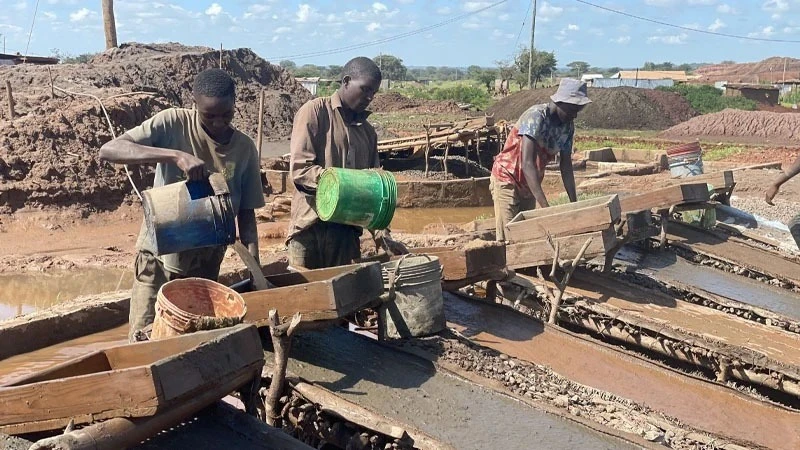
THERE are rising concerns that the boom in mining activities is causing deforestation to take unprecedented dimensions, not first for the land cleared for mining but a fallout of other bush cleared for habitation and trade outlays to provide a backup of services.
THERE are rising concerns that the boom in mining activities is causing deforestation to take unprecedented dimensions, not first for the land cleared for mining but a fallout of other bush cleared for habitation and trade outlays to provide a backup of services.
Unlike in campaigns over the past decade about fossil fuels, activists at various levels are not in a position to campaign about abandoning rare earth metals or precious stones of various sorts not used in computer, nuclear or other electronics activities.
Activists now set other goals, like bringing mining sector companies to assess their activities, track the pace of deforestation on their own sites and in adjacent zones, mining communities.
This kind of affirmation or appeal is packed as an appeal to mining firms in what resembles a dialogue with governments and communities.
However, it is more of advocacy for sharp rates of taxation upon mining companies so that governments can sort out the mess of deforestation by mining firms on the one hand and by satellite communities sprouting around the mines on the other.
As would be expected, activist will leverage the pressure on big mining firms to take up the entirety of the projected cost, as figuring out how small miners can also pay up as it risks nourishing smuggling activity sell the stones to ‘clever’ outlets.
Stronger environmental regulation is thus said to be needed to require mining companies to assess cumulative and long-term impacts across wider ecosystems, not just within operational sites.
This amounts to something falling under the auspices of the regulatory agencies rather than the miners, as it isn’t their business to environmentally administer the land around which they work, outside the sphere of the proper licensed area, as the suggestion appears to imply.
An auxiliary reason for the suggestion is the fact that habitual drawing up of environmental projects for World Bank financing or other donor agencies has sort of paled, even as activists aren’t at all picking up business-oriented thrusts.
Looked at from that perspective, it amounts to seeking to reinforce the old scheme where governments need money to sort out deforestation arising from mining activities.
Yet this risks making a country’s investment environment inhospitable for large and medium scale mining activity, in which case the country will have to seek assistance from the donors, unavoidably.
In the circumstances, it comes back to fomenting pressure at the local level against mining companies, but it has less capacity at the moment as earnings from the sector are far too important to start sporadic sparring activities in that context.
Issues of heavily taxing foreign firms were usually linked to sustained development aid, as it diminished the extent to which the government had to pact, by necessity, with the firms. In the relative slack of sustained aid, pressure on mining firms declines.
Take the case of the Democratic Republic of Congo, which is commonly said to produce more than half of the world’s cobalt and is grossly affected by deforestation.
Activists say each hectare of direct cobalt mining is linked to as much as 58 hectares of additional forest loss. The issue there is less to heavily tax two or more cobalt mining firms than to get a land rejuvenation joint venture. It always comes to a hard bargain.
Top Headlines
Trending Stories
















© 2026 IPPMEDIA.COM. ALL RIGHTS RESERVED