




Why African countries achieve slow socioeconomic progress
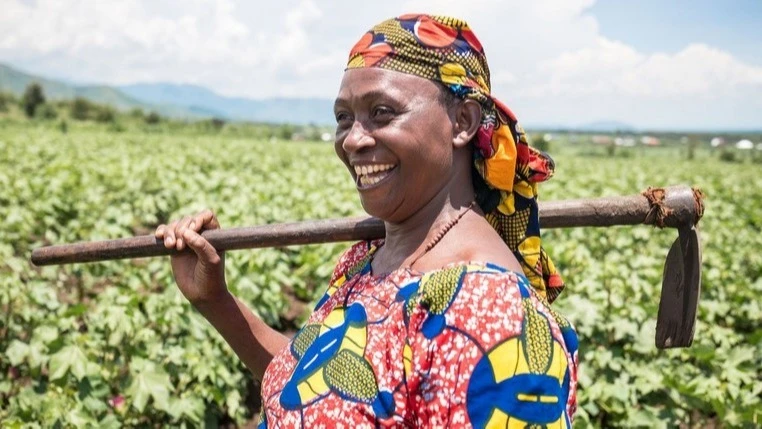
WHEN I was growing up, I observed poor and wealthy families living right next to each other in our village. I often asked myself why one family struggled in poverty while their immediate neighbour lived in abundance.
Yet, within a few years, the tables turned. Conditions improved dramatically for some of the impoverished households, while the fortunes of once-wealthy families declined. Even today, village elders marvel at how quickly these shifts occurred. The reality is stark: several families that previously held vast wealth are now impoverished, while formerly poor families have become prosperous—even employing members of those once-wealthy households to work for them.
This micro-level paradox mirrors a global phenomenon. Poverty—defined fundamentally as the deprivation of basic necessities required to live decently—is not merely an individual experience. It also manifests at community, national, regional, and global levels.
In macroeconomic discussions, observers frequently divide the globe into the Global North (highly industrialised, high-income nations) and the Global South (less industrialised, low- to middle-income nations). Between these spheres lie emerging markets. These are rapidly developing, upper-middle-income economies striving to cross the threshold into high-income status, thanks to forward-looking governance and the responsible management of national resources for the benefit of all.
Historical records show that during the sweeping wave of African independence in the 1960s, several global nations shared nearly identical developmental baselines with African states. Since then, countries like South Korea, Singapore, and Malaysia have made monumental economic strides, firmly embedding themselves into middle- and high-income brackets. Conversely, most African nations continue to battle systemic poverty, achieving only marginal socioeconomic progress despite more than six decades of self-governance.
This divergence is visibly reflected in the daily lives of citizens. It dictates whether a family earns enough to sustain a decent standard of living, afford quality healthcare, or send their children to competitive schools where they can get better education, secure scholarships, and build prosperous careers.
As of June 2026, the United Nations classifies 44 nations as least developed countries (LDCs). This cohort is currently experiencing a historic wave of structural transitions monitored by the UN Committee for Development Policy (CDP).
Currently, 14 LDCs are actively moving through the multi-year graduation pipeline. Among them, Rwanda, Tanzania, and Uganda were formally recommended for graduation by the CDP after meeting two core benchmarks: the Human Assets Index (HAI) and the Economic and Environmental Vulnerability Index (EVI). These East African nations are scheduled for a structural review by the UN Economic and Social Council (ECOSOC) in 2027. If they maintain their performance, their formal graduation timelines will be finalised.
Meanwhile, six nations have definitive timelines to exit the LDC category altogether: Bangladesh (2026), Lao People’s Democratic Republic (2026), Nepal (2026), Solomon Islands (2027), Cambodia (2029), and Senegal (2029).
Exit from this category remains rare. Since the framework's inception in 1971, only eight countries have successfully graduated out of LDC status: Botswana (1994), Cabo Verde (2007), Maldives (2011), Samoa (2014), Equatorial Guinea (2017), Vanuatu (2020), Bhutan (2023), and Sao Tome and Principe (2024).
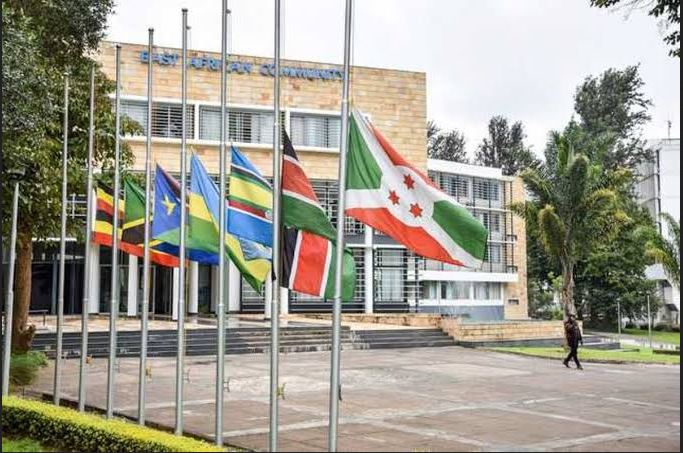
Geographically, African nations comprise the overwhelming majority of the LDC list with 32 countries, followed by seven in Asia and five island nations. Within the eight-member East African Community (EAC), Kenya is the sole nation that has never been classified as an LDC. The remaining seven EAC states remain bound to the category, heavily reliant on foreign donor aid that rarely trickles down to improve the livelihoods of ordinary citizens. This dynamic has fuelled a massive financial chasm between political elites and the general populace.
Despite receiving foreign assistance annually, many African LDCs remain structurally stagnant. Rather than diagnosing the internal causes of this economic immobility, political leaders frequently scapegoat colonialism, neo-colonialism, or Western imperialism as the sole causes of poverty.
While these historical systems undoubtedly caused severe damage, relying on them as a blanket excuse grows less convincing as nations cross the 60-year mark of independence. This externalised blame entirely dismisses the role of bad governance, resource mismanagement, corruption, and systemic policy flaws.
In the timeless self-help text Napoleon Hill's Keys to Success: The 17 Principles of Personal Achievement, compiled by the Napoleon Hill Foundation, the author argues that true advancement requires a "burning desire"—knowing precisely what one wants and backing it with continuous effort and meticulous planning.
Hill notes that success demands: "extraordinary effort which most people are not willing to make. The value of wealth that comes with success is that which comes with it the lessons learned to acquire it."
This reveals the precise vulnerability of many African states: a failure to internalise, adapt, and implement structural lessons that accompany sustainable economic development. By blaming external factors exclusively, African nations fail to see—or fix—problems manufactured at local level.
We must consider the wisdom of the ancient proverb: "If you plant for days, plant flowers. If you plant for years, plant trees. If you plant for eternity, plant ideas." Looking honestly at our continent, we must ask ourselves: what kind of seeds are we truly planting in Africa?
Top Headlines
Trending Stories














© 2026 IPPMEDIA.COM. ALL RIGHTS RESERVED