




Magufuli Bridge: Connecting Tanzania to a new era of economic diplomacy
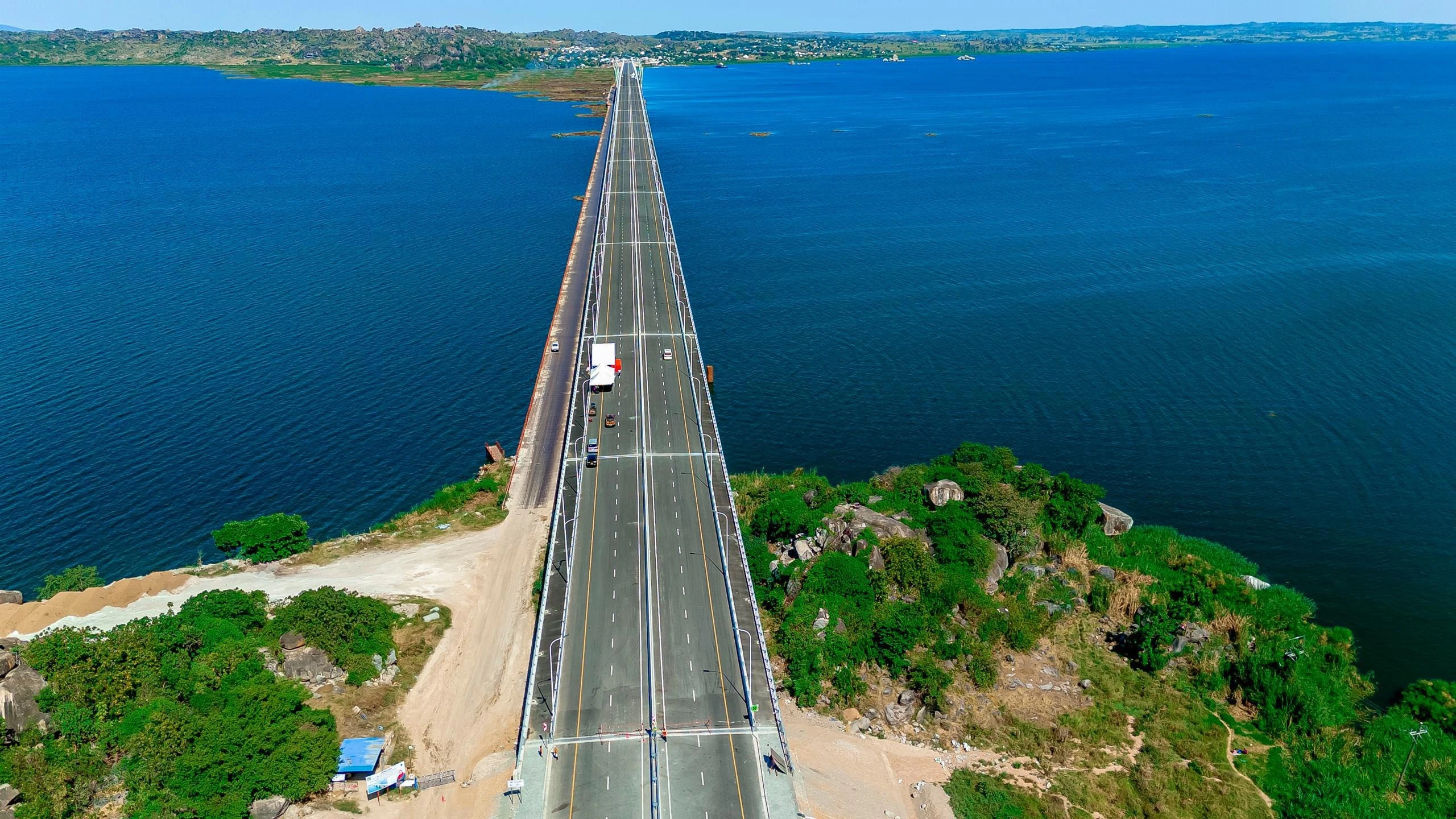
FOR decades, crossing the Gulf of Mwanza between Kigongo and Busisi was both a necessity and a challenge. Hundreds of passengers, buses and heavy trucks relied on ferries, often waiting up to 45 minutes—or much longer during peak hours or bad weather—to complete the crossing. Mechanical breakdowns frequently disrupted transport, delaying agricultural produce, minerals, fuel and manufactured goods destined for markets across Tanzania and neighbouring countries.
Today, that journey takes about four minutes.
The completion of the 3.2-kilometre John Pombe Magufuli (Kigongo–Busisi) Bridge, inaugurated in June 2025, has transformed mobility across Lake Victoria. More importantly, it has become a powerful symbol of Tanzania's evolving economic diplomacy—an approach that uses infrastructure, trade and regional integration to drive national development.
Constructed at a cost of more than Sh716 billion and financed entirely by the Government of Tanzania, the bridge is the longest in East Africa and one of the continent's most significant engineering achievements. Its greatest value, however, lies not in its size but in its potential to unlock economic growth across the Lake Zone and strengthen Tanzania's position as a regional trade hub.
Infrastructure as a strategic asset
Modern diplomacy extends beyond political dialogue and international agreements. Increasingly, countries are advancing their national interests through strategic investments in roads, ports, railways and bridges that stimulate trade and attract investment.
Tanzania has embraced this approach. Under President Samia Suluhu Hassan, infrastructure development has become central to the country's strategy for enhancing competitiveness and expanding regional economic integration.
While inaugurating the bridge, President Samia described it as a "great liberator" for communities that had endured ferry delays for generations. She urged residents to capitalise on the improved transport network by expanding agricultural production, increasing trade and supplying larger domestic and regional markets.
Her message reflected a broader policy direction: infrastructure is no longer viewed merely as public expenditure but as a long-term investment in productivity, commerce and economic transformation.
Unlocking regional trade
The bridge connects far more than the districts of Misungwi and Sengerema. It strengthens the transport corridor linking Mwanza and Geita while providing faster access to Rwanda, Burundi and Uganda—landlocked countries that depend on efficient regional transport networks.
Every hour saved on the road lowers transport costs, shortens delivery times and improves business competitiveness. For exporters, manufacturers and investors, efficient logistics reduce operational costs and increase profitability.
According to Tanzania National Roads Agency (Tanroads) Development Projects Executive Director, Engineer Boniface Mkumbo, the bridge removes one of Tanzania's most persistent transport bottlenecks. Heavy trucks carrying agricultural produce, minerals, petroleum products and manufactured goods can now operate throughout the year without interruptions caused by ferry schedules or adverse weather.
The result is a more efficient supply chain that benefits producers, transporters and consumers alike.
Transforming the Lake Zone economy
The Lake Zone remains one of Tanzania's most productive regions, with agriculture, fisheries and mining forming the backbone of its economy. Yet for many years, inadequate transport infrastructure constrained its commercial potential.
Farmers transporting cotton, rice, maize and horticultural products faced costly delays before reaching markets. Fishing companies encountered similar challenges in moving fresh fish to processing plants and export facilities, while mining companies transporting gold and other minerals incurred higher operating costs because of unreliable ferry services.
The bridge fundamentally changes this equation. Faster and more reliable transport lowers business costs, expands market access and improves profitability across key sectors. It is also expected to stimulate tourism, manufacturing, real estate development and hospitality, creating new employment opportunities throughout Mwanza, Geita and neighbouring regions.
Infrastructure and investment
Although fully financed by Tanzania, the bridge also reflects the value of international cooperation. Chinese contractors contributed engineering expertise and technical skills, demonstrating that development partnerships extend beyond financing to include technology transfer and capacity building.
According to Eng. Mkumbo, the project created more than 1,500 jobs, with nearly 1,000 filled by Tanzanians. Local engineers, technicians and artisans gained valuable experience while working alongside international specialists, strengthening the country's capacity to deliver future infrastructure projects.
Supporting Vision 2050
The bridge aligns closely with Tanzania Development Vision 2050, which identifies modern infrastructure as a key driver of industrialisation, productivity and sustainable economic growth.
Together with the Standard Gauge Railway, expanded ports and upgraded airports, the bridge forms part of an integrated logistics network designed to reduce the cost of doing business, promote exports and attract foreign direct investment. It reinforces Tanzania's ambition to become East Africa's preferred gateway for regional trade and investment.
Prof Dickson Pastory of the College of Business Education argues that Tanzania is increasingly presenting itself not as a recipient of development assistance but as a strategic investment destination. Membership in the East African Community (EAC), the Southern African Development Community (SADC) and the African Continental Free Trade Area (AfCFTA) has expanded the country's commercial reach, enabling investors to view Tanzania as a gateway to a regional market of more than 500 million consumers.
Infrastructure such as the Magufuli Bridge provides the physical foundation upon which those investment opportunities can flourish.
More than concrete and steel
Permanent Secretary in the Ministry of Transport, Prof Godius Kahyarara, observes that infrastructure succeeds only when it enhances productivity, facilitates commerce and strengthens economic competitiveness. By that measure, the Magufuli Bridge represents far more than an engineering achievement.
Its true value will not be measured simply by the number of vehicles crossing it each day, but by rising exports, growing private investment, stronger regional trade and expanded employment opportunities.
For communities across the Lake Zone, it offers faster access to markets, education and healthcare. For businesses, it lowers transport costs and improves efficiency. For neighbouring countries, it strengthens regional connectivity.
Ultimately, the John Pombe Magufuli Bridge is more than East Africa's longest bridge. It is a bridge between infrastructure and opportunity, between national ambition and regional prosperity. Above all, it demonstrates that in the twenty-first century, strategic infrastructure has become one of the most effective instruments of economic diplomacy.
Top Headlines
Trending Stories












© 2026 IPPMEDIA.COM. ALL RIGHTS RESERVED