




How family planning is helping Njombe smallholder farmers to build a better future
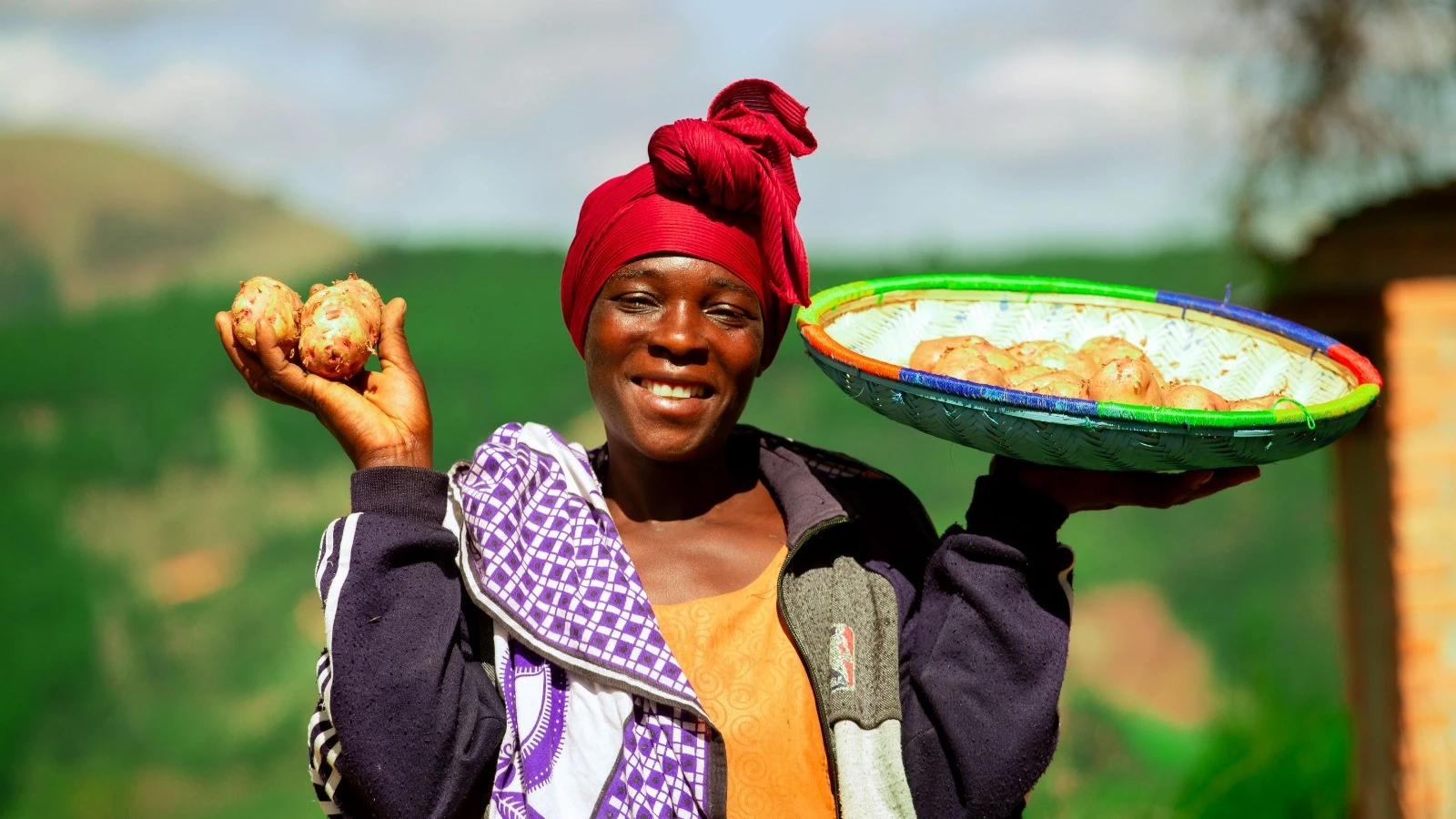
WHEN Amadea Mringo, a mother of four from Luvuyo village in Madope ward, Ludewa District in Njombe Region, first walked into her local health facility seeking advice, she had no idea the decision she was about to make would transform her life.
Like many women in rural Tanzania, she spent her days balancing childcare, household responsibilities and demanding farm work. Life revolved around meeting immediate needs, with little opportunity to think beyond the next planting season or the next pregnancy.
Today, that picture has changed dramatically.
Through access to family planning education and services, Mringo says she has regained control over her health, improved her family's financial security and found the time and energy to invest in farming—turning what was once a daily struggle into a pathway towards a better future.
Mringo is among thousands of women living in hard-to-reach communities who have benefited from sexual and reproductive health and family planning services supported by the United Kingdom Government through the Foreign, Commonwealth and Development Office (FCDO) and implemented by MSI Tanzania under the Scaling Up Family Planning (SuFP) programme across 12 regions, including Njombe.
For Mringo, the journey has been one of resilience, determination and informed decision-making.
In the early years of her marriage, frequent pregnancies left little room for recovery. Every day followed the same exhausting routine. She woke before sunrise to prepare the household, care for her children and head to the farm, where she cultivated Irish potatoes, maize and green peas.
Many days she worked while carrying a child on her back.
By evening, she returned home physically drained, only to face more household responsibilities.
"I was always busy, but I never felt like I was making progress," she recalls.
"I would spend the whole day working, yet I could not see our lives improving. I wanted to expand our farming, earn more income and build a better house for my children, but there was never enough time or strength to plan for the future."
As a smallholder farmer, she understood that successful agriculture depends on planning, consistency and timing. However, repeated pregnancies interrupted her ability to prepare adequately for each farming season, limiting both productivity and household income.
Although she dreamed of improving her family's living standards, those ambitions seemed increasingly out of reach.
Everything changed after the birth of her third child.
During a visit to a health facility, healthcare providers counselled her on family planning and explained how spacing pregnancies could improve her health while allowing families to plan more effectively for the future.
Like many women in her community, however, Mringo was initially hesitant. Rumours and misconceptions surrounding contraception were widespread. Many people claimed family planning caused infertility, permanent health complications or other long-term problems.
"The rumours were everywhere," she says.
"You heard people saying family planning would make women barren or destroy their health. After hearing those stories over and over again, I became afraid. I wanted to protect my health, but I was also scared."
Eventually, she realised that the decision should be based on medical advice rather than community rumours. "I asked myself who would suffer if I made the wrong decision," she says. "It would not be the people spreading rumours. It would be me and my children. That is when I decided to trust healthcare professionals."
Following counselling, she chose a contraceptive implant. Looking back, she describes that decision as the turning point in her life. With properly spaced pregnancies, her health improved and her energy gradually returned.
For the first time in years, she says she was able to focus on long-term goals instead of simply coping with everyday demands.
"Family planning gave me back something I had lost for a long time—time to think and plan," she explains.
"I could spend more time on my farm without worrying about carrying a baby or feeling constantly exhausted. I had the energy to prepare my fields properly, improve production and think about how to increase our harvest."
Together with her husband, Mringo adopted a more organised approach to farming.
Today, the family cultivates three acres of land, including one acre of Irish potatoes, half an acre of maize and another half-acre of green peas.
Improved productivity has translated into higher household income.
She says the family has earned about Sh1.5 million from selling their crops, money that has enabled them to purchase bricks and 20 iron sheets for a modern house they are building.
"When we bought the iron sheets, I felt proud," she says.
"It showed me that planning and patience were paying off. We were no longer just surviving—we were building a future."
The benefits extend well beyond income. With children spaced approximately five years apart, she says she can devote more attention to their education, healthcare and overall wellbeing.
"When children are well spaced, you are not overwhelmed," she says.
"You can prepare for school expenses, take care of their health and spend quality time with them. That makes a big difference."
Her experience reflects the broader impact of the Scaling Up Family Planning programme, a nine-year initiative running from 2017 to 2026.
The programme aims to strengthen access to quality family planning services, improve reproductive health information and reach women, young people, persons with disabilities and underserved communities across Tanzania.
Central to its success are outreach teams that travel to remote villages where healthcare services remain difficult to access.
Among them is Elizabeth Steven Mjema, a nurse and outreach service provider with MSI Tanzania who has spent 18 years delivering reproductive health services in rural communities.
Her work extends beyond providing contraceptive services. She also mentors local healthcare workers to ensure quality services continue after outreach teams leave.
"Every time we visit a health facility, we focus on strengthening the knowledge and confidence of local healthcare providers," she says.
"We want women to continue receiving quality family planning services long after we have gone."
Mjema remembers a time when myths dominated conversations around contraception.
"Many women believed family planning would stop them from having children forever," she says.
"Others believed implants could disappear inside the body. Many genuinely feared using these services because of misinformation."
Years of community engagement, counselling and education have gradually changed perceptions. Trust has grown as more women share positive experiences and communities witness the benefits firsthand.
According to Njombe Regional Medical Officer, Dr Juma Mfanga, improved access to family planning services has contributed to wider improvements in maternal and newborn health across the region.
"We have seen significant progress," he says.
"Maternal deaths have declined, more women are planning their pregnancies and healthcare providers have become more confident in delivering quality family planning services."
He notes that maternal deaths in Njombe have fallen from 27 in 2020 to 13 in 2025, while neonatal deaths have also declined as healthcare services continue to improve.
For Mringo, those statistics are reflected in her everyday life. She now sees family planning not simply as a health service but as an opportunity to invest in her family's future.
"I always encourage other women not to make decisions based on fear or rumours," she says.
"Visit a health facility, ask questions and understand your options. Family planning helped me become healthier, more productive and more confident. It gave me the opportunity to build the life I had always wanted for my children."
Top Headlines
Trending Stories

















© 2026 IPPMEDIA.COM. ALL RIGHTS RESERVED