




Home-grown innovation offers hope for safe drinking water in Tanzania
ACCESS to safe and clean drinking water remains one of Tanzania's most pressing public health challenges, particularly in areas where naturally occurring fluoride contaminates groundwater.
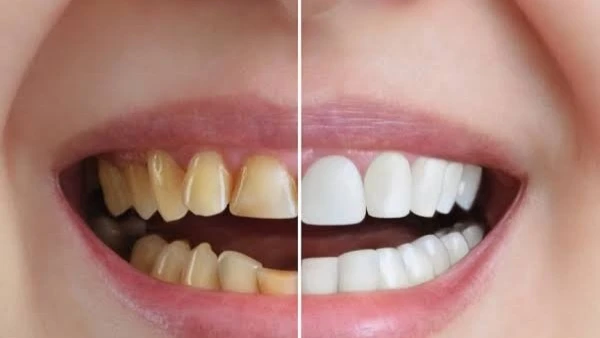
Long-term consumption of water containing excessive fluoride can lead to dental and skeletal fluorosis, conditions that affect health, quality of life and productivity. Addressing this challenge requires affordable, efficient and locally appropriate water treatment technologies that can serve communities with limited access to centralized treatment systems.
In response to this need, researchers from the Department of Chemistry at the University of Dar es Salaam's (UDSM) College of Natural and Applied Sciences have developed FluoroGuard, an innovative mineral-based technology designed to remove excess fluoride from drinking water.
The technology was unveiled last week during a media briefing by Dr. Makungu Marco Madirisha, Senior Lecturer and researcher in the Department of Chemistry, who highlighted ongoing research efforts aimed at supporting the Government's drive to improve drinking water quality across the country.
According to Dr. Madirisha, FluoroGuard is a locally developed adsorption technology that uses naturally available mineral resources to remove fluoride from groundwater. It has been designed to provide a sustainable and cost-effective solution for communities that depend on groundwater sources found within the geological formations of the East African Rift Valley, including parts of Arusha, Manyara and Singida regions, where elevated fluoride levels are common.
"FluoroGuard was developed through a research programme in the Department of Chemistry dedicated to sustainable water treatment technologies," Dr. Madirisha said.
The programme was led by Dr. Makungu Marco Madirisha together with Dr. Leonard Akwilapo, who has since retired. The project also benefited from the contribution of postgraduate researcher Arafa Adam Msagati, whose Master's degree research focused on the development and evaluation of the technology under their academic supervision.
The collaboration, Dr. Madirisha said, demonstrates the important role that partnerships between experienced researchers and postgraduate students play in advancing scientific innovation and developing practical solutions to national challenges.
The innovation comes at a time when the government continues to invest heavily in expanding access to safe and clean water as part of broader efforts to improve public health, protect the environment and accelerate sustainable development.
While infrastructure investments remain essential, researchers believe scientific innovation will continue to play a critical role in improving water quality through locally developed technologies that complement existing government initiatives.
Dr. Madirisha said FluoroGuard reflects UDSM's commitment to translating scientific research into practical technologies capable of addressing national priorities while promoting environmental sustainability, local innovation and value addition to Tanzania's natural resources.
The technology works through a carefully engineered adsorption process. As contaminated water passes through the filtration medium, fluoride ions are selectively captured by specially prepared mineral particles, allowing water with significantly reduced fluoride concentrations to flow through for consumption.
Because the filtration material is produced from locally available minerals, FluoroGuard promotes sustainable utilization of domestic resources while reducing dependence on imported treatment materials. The researchers say this approach could also lower production costs and support future local manufacturing.
So far, laboratory investigations and pilot-scale evaluations have produced encouraging results.
According to the research team, laboratory batch adsorption experiments achieved a fluoride removal efficiency of 97.67 percent, with a maximum adsorption capacity of 0.097 milligrams of fluoride per gram of adsorbent under controlled conditions.
To assess its performance under real operating conditions, the technology was later tested at the Ngurdoto Research Centre in Arusha using groundwater in a field-scale fixed-bed column system.
The field evaluation produced even stronger results, recording a fluoride removal efficiency of 99.07 percent and an adsorption capacity of 7.42 milligrams of fluoride per gram of adsorbent.
Dr. Madirisha said the successful pilot evaluation represents an important milestone in the technology's development.
"As part of its technology validation process, FluoroGuard has been deployed for pilot evaluation at the Ngurdoto Research Centre, where field studies are providing valuable information on its performance under practical operating conditions and supporting future large-scale implementation," he said.
The pilot project has generated valuable operational data while providing additional scientific evidence that the technology can perform effectively outside laboratory settings.
Researchers believe FluoroGuard has the potential to support decentralized water treatment systems in both rural and urban communities, particularly where centralized water treatment infrastructure is unavailable or difficult to maintain.
Another key advantage of the technology is its flexibility. According to the research team, FluoroGuard can be adapted for household, institutional or community-scale water treatment systems, making it suitable for a wide range of users.
Its simple design and reliance on locally available materials create opportunities for technology transfer, local production and wider adoption, especially in fluoride-affected areas.
Dr. Madirisha explained that fluoride itself is not harmful at appropriate concentrations.
"Fluoride is a naturally occurring mineral found in rocks, soils and groundwater in many parts of the world. At appropriate concentrations, fluoride contributes to good dental health," he said.
However, excessive fluoride levels in drinking water require treatment to ensure water remains safe for long-term consumption.
In Tanzania, elevated fluoride concentrations occur naturally in some groundwater sources associated with the geological formations of the East African Rift Valley. As groundwater moves through fluoride-bearing rocks and minerals, it dissolves naturally occurring fluoride before reaching wells and boreholes used by surrounding communities.
This natural geological process has encouraged researchers to develop sustainable technologies capable of reducing fluoride levels while complementing the Government's ongoing efforts to improve water quality.
For many years, bone char has been among the most widely used materials for fluoride removal because of its strong adsorption performance. Bone char, also known as animal charcoal, is produced by heating animal bones under low-oxygen conditions and consists mainly of calcium phosphate, together with smaller amounts of carbon and calcium carbonate.
Rather than replacing existing technologies, Dr. Madirisha said FluoroGuard expands the range of available treatment options.
"As a mineral-based technology, it provides an additional home-grown option that complements existing fluoride treatment methods while maintaining high fluoride removal efficiency," he said.
Beyond improving water quality, FluoroGuard is expected to contribute directly to better public health by reducing exposure to excessive fluoride and lowering the risk of dental and skeletal fluorosis.
The technology also promotes sustainable utilization of Tanzania's natural mineral resources while strengthening local innovation and supporting value addition through home-grown scientific solutions.
Researchers believe the project illustrates how sustained investment in science and research can generate technologies that contribute directly to national development.
It also highlights the growing contribution of postgraduate research in strengthening Tanzania's research and innovation ecosystem through close collaboration between senior scientists and emerging researchers.
The Department of Chemistry at UDSM says it remains committed to developing innovative technologies that respond to national priorities while advancing scientific excellence.
Working with government institutions, research centres, industry and development partners, the department continues to transform scientific discoveries into practical technologies with the potential to improve the lives of communities across the country.
FluoroGuard also contributes to the achievement of Sustainable Development Goal 6 on Clean Water and Sanitation by supporting efforts to improve drinking water quality through affordable, innovative and sustainable technologies.
From laboratory research to successful field-scale evaluation at the Ngurdoto Research Centre, the technology demonstrates the growing capacity of Tanzanian scientists to develop effective solutions using the country's own natural resources.
As Tanzania continues to strengthen its science, technology and innovation agenda, FluoroGuard stands as another example of the important role universities play in addressing national development challenges through research, innovation and collaboration.
Top Headlines
Trending Stories




















© 2026 IPPMEDIA.COM. ALL RIGHTS RESERVED