




Dar es Salaam Port: Tanzania’s gateway to economic diplomacy
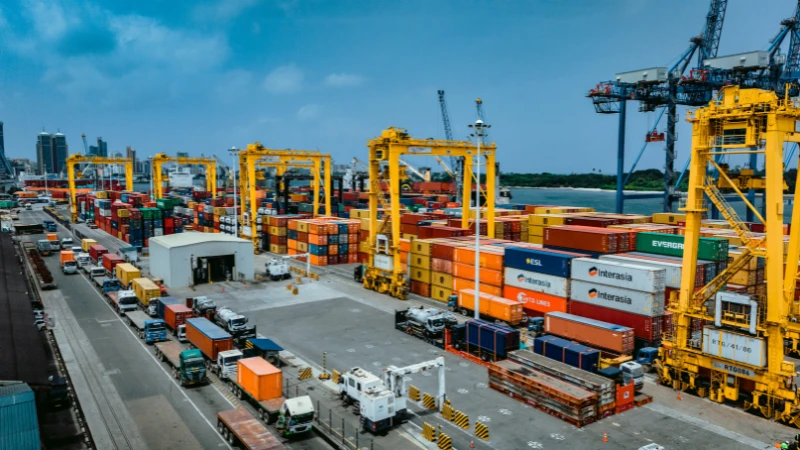
AT the edge of the Indian Ocean, the Port of Dar es Salaam operates on a schedule that dictates the economic stability of central Africa.
Under high-output floodlights, heavy container cranes transfer steel boxes from vessels arriving from manufacturing hubs in Asia and Europe directly onto long lines of flatbed trucks.
At the facility's gates, drivers from Uganda, Rwanda, Burundi, Zambia, and the Democratic Republic of the Congo wait for customs clearance before beginning multi-day journeys into the African hinterland.
Beneath this round-the-clock movement lies a deliberate shift in East Africa’s commercial architecture. At the region’s primary maritime gateways, traditional statecraft is no longer confined to summits or treaties.
Instead, international influence is increasingly measured in ship turnaround times, customs integration, and transit tariffs.
By handling the vast majority of Tanzania’s international commerce, the Port of Dar es Salaam has become a critical transit hub and a regional lifeline, linking landlocked economies directly to global markets.
Yet as global supply chains realign, the gateway faces compounding competitive pressures.
With rival corridors expanding along neighboring coastlines, Tanzania is accelerating its infrastructure spending to protect its central trade route and demonstrate that its regional diplomacy is backed by operational capacity.
"The Port of Dar es Salaam functions as a shared regional foundation," said Professor Godius Kahyarara, Permanent Secretary in Tanzania's Ministry of Transport.
"By expanding roads, rail networks, and maritime berths, we are lowering the cost of doing business across borders, making the central corridor the preferred path for regional trade."
Engineering the gateway
Geography grants Dar es Salaam a natural deep-water harbor proximate to major shipping lanes connecting global markets, but converting that geography into regional dominance requires aggressive capital investment.
The Tanzania Ports Authority has launched an expansive modernization campaign designed to nearly double its total cargo capacity over the coming years, aiming to position the country as the primary logistics hub for Eastern, Central, and Southern Africa.
For the political leadership in Dodoma, these upgrades are the vanguard of a broader national infrastructure push.
Minister of Transport Prof. Makame Mbarawa has consistently championed a transport budget that funnels trillions of shillings directly into development, prioritizing the expansion of the principal maritime gateway alongside the nationwide Standard Gauge Railway (SGR).
According to Mbarawa, the integration of these capital projects is vital to permanently reducing domestic transit friction and undercutting the logistics costs of rival regional corridors.
"The government is keen to enhance port efficiency and provide a friendly cost of doing business," Mbarawa noted, emphasizing that the state encourages partnerships to complement ongoing efforts in solving network challenges between neighboring states.
This expansion relies on a series of engineering upgrades, including extensive harbor dredging, entrance channel widening, and the deployment of specialized cargo cranes.
According to port data, these technical adjustments have sharply reduced average vessel waiting times, mitigating costly delays for international shipping lines and stabilizing supply chain predictability across borders.
For terminal operators, these efficiency gains form the baseline of Tanzania’s broader foreign policy. A reliable port stabilizes trade relations, and consistent trade volumes solidify regional political alignments.
However, those managing the trade lines warn that auxiliary infrastructure and software systems must keep pace with marine investments to preserve this competitive advantage.
Prosper Lymo, a customs and clearing agent operating at the port, notes that state-led trade initiatives have altered investment inflows, bringing a steady stream of international investors and foreign port users to Tanzania.
Yet, digital and physical friction remains a challenge. Lymo notes that the presence of Chinese logistics firms and business owners at the port has scaled up significantly, moving diverse cargo that includes agricultural goods and timber bound for outbound Asian markets.
Engineer Tony Swai, a veteran clearing agent, also admitted that there has been a marked increase in the inflow of port users, a trend he attributes directly to the success of Tanzania's economic diplomacy.
Swai recommends unifying the digital networks of key regulatory bodies, including the Tanzania Revenue Authority (TRA), the Tanzania Bureau of Standards (TBS), and government inspection agencies.
"Unifying these systems would allow complex cargo inspections to occur securely outside the immediate port perimeter," Swai said. "This would accelerate container release rates and remove human delays."
From geopolitics to commercial Statecraft
The prioritization of logistics efficiency reflects a broader transition in Tanzanian foreign policy, shifting from historical non-alignment and regional liberation support toward commercially driven statecraft.
Ambassador John Ulanga, Head of the Diplomacy Unit at the Ministry of Foreign Affairs and East African Cooperation, views this as a structural redefinition of modern diplomacy.
He explains that while foundational principles established the nation’s reputation as a regional mediator, the modern marketplace demands an entirely different operational toolkit.
Contemporary diplomats require deep financial acumen, market analysis capabilities, and an entrepreneurial approach to protect national commercial interests in a highly competitive landscape.
This commercial focus anchors major bilateral relationships, notably with China, where the port serves as the primary maritime node for billions of dollars in mutual trade.
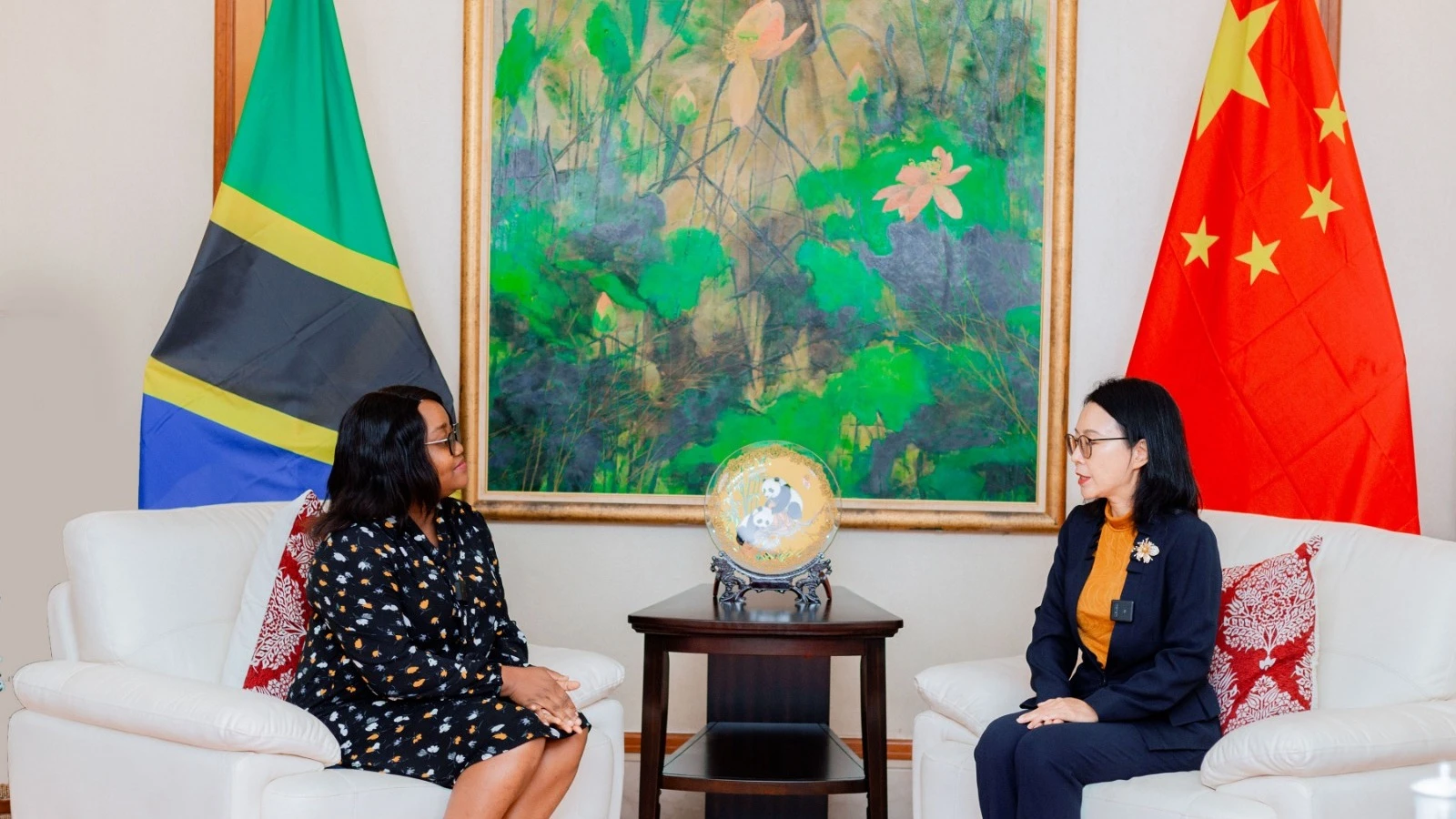
Chinese Ambassador to Tanzania, Chen Mingjian, highlights that this maritime connection has deep historical roots, stretching back centuries to early coastal trade fleets.
Beyond the historical narrative, Chen emphasizes that Beijing views the modernization of Dar es Salaam's maritime network as a cornerstone of modern Sino-African alignment, pointing to the ongoing technical cooperation and heavy machinery agreements backed by Chinese enterprises at the docks.
"China remains committed to working alongside Tanzania to deepen our comprehensive strategic cooperative partnership, focusing on high-quality maritime development," Chen stated.
Furthermore, the Ambassador notes that the port’s evolution serves as an essential nexus for broader continent-wide initiatives, bridging China’s Belt and Road Initiative directly with Africa’s internal trade routes.
Chen underscored that expanding the efficiency of this specific coastal gateway is crucial not only for bilateral trade but also for accelerating the industrialization of the entirely East African region, creating a more interconnected network for global manufacturing supply chains.
Today, modern container liners utilize Dar es Salaam as their principal continental entry point, reinforcing its position as a vital trade link.
The economics of interdependence
For landlocked central African states, the operational efficiency of Dar es Salaam directly affects domestic economic stability and consumer price inflation.
In Uganda, the port serves as an indispensable alternative trade corridor for fuel and industrial imports. Ssozy Kewene, Customer Manager at the Uganda Ports Authority, emphasizes that the port's operational fluidity actively strengthens regional trade ties by preventing costly supply chain disruptions.
The reliance is even more pronounced for smaller economies like Burundi, which routes the vast majority of its international commerce through the Tanzanian corridor.
Julien Ndekumana, a manager at the Burundi Revenue Authority, notes that without reliable access to this specific gateway, participating in global trade would become cost-prohibitive for domestic businesses.
Similarly, in the eastern Democratic Republic of the Congo—a region highly dependent on consumer imports but structurally isolated from Atlantic ports—the gateway represents a vital economic pipeline.
Jean Purusi, Governor of South Kivu Province, points out that the vast majority of imports and exports for the province pass directly through Tanzania via the ports of Dar es Salaam and Kigoma.
This makes the coastal gateway central to the economic survival of the Congolese interior.
These dependencies underscore a defining market reality: the port has transformed from a domestic commercial asset into a shared regional infrastructure that shapes the political and economic trajectory of multiple nations.
Supply chain integration
Beyond macroeconomic trade flows, the facility serves as a massive domestic employment engine. Daily, thousands of public and private sector personnel operate inside the terminal environment, supporting a sprawling logistics ecosystem of drivers, warehouse operators, and freight forwarders across the commercial capital.
As one terminal worker summarized, the port sustains families far beyond the coast, and when terminal velocity slows, the entire regional economy feels the shock.
Translating that high-level economic policy into daily terminal velocity falls to the Tanzania Ports Authority (TPA), led by director general Plasduce Mbossa.
Under Mbossa's tenure, the authority has aggressively rolled out new public-private standard operating procedures—such as direct cargo transfers to the Kwala Inland Container Depot while signing long-term development pacts with global operators for new berths at Dar es Salaam and the upcoming Bagamoyo Port.
"TPA shall keep on building good business relations for our traders and facilitate them with all necessary support," Mbossa maintains, adding that the principal goal remains eliminating bureaucratic bottlenecks AND MAKE Dar es Salaam the preferred port of regional and international trade”
These initiatives align closely with Tanzania’s long-term development agenda, which seeks to transform the country into a fully industrialized, middle-income economy.
A central pillar of that vision is leveraging the port of Dar e salaam and the expanding standard gauge railway to maximize opportunities under the African continental free trade area.
Together, they are expected to cement Tanzania’s position as the leading logistics and commercial gateway for central, eastern and southern Africa.
By expanding port throughput and linking it directly to the expanding Standard Gauge Railway network heading into the interior, Tanzania intends to secure its position as the undisputed logistics hub for Central and Southern Africa.
As darkness settles over the habour, the cranes continue move under bright floodlights. Ships continue to depart into the Indian Ocean, carrying commodities bound for global markets, while long convoys of trucks roll inland toward the African interior.
They transport more that cargo. they also carry Tanzania's strategic ambition to rewrite regional trade diplomacy through the leverage of infrastructure.
The Port of Dar es Salaam is no longer just a gateway to Tanzania; it is a gateway to Africa’s economic future.
Top Headlines
Trending Stories





















© 2026 IPPMEDIA.COM. ALL RIGHTS RESERVED