




Beyond assistance: Why the new U.S-Tanzania health partnership matters
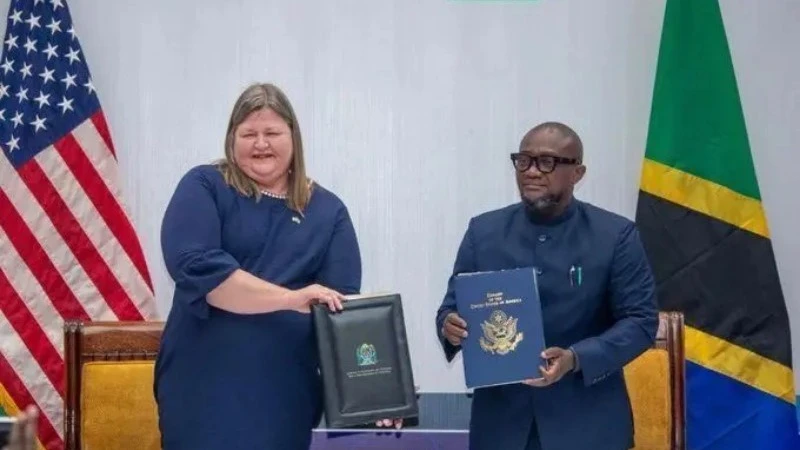
WHEN news broke that Tanzania and the United States had signed a five-year, US$3.1 billion health cooperation agreement, my mind immediately went back to a story I wrote a few years ago while serving as a Communications Officer at Amref Health Africa. It was the story of Vedastina Shumbusho, a community health worker from Bukoba whose vigilance helped stop one of the world's deadliest diseases before it could spiral into a national or regional crisis.
At 3:00 a.m. on March 16, 2023, Vedastina filed an alert after noticing unusual deaths in her community. Laboratory tests later confirmed Marburg virus. Because she had been trained, because surveillance systems were in place, and because health authorities responded swiftly, the outbreak was contained within Bukoba. What could have become a devastating regional emergency ended with only nine confirmed cases.
Vedastina's story has stayed with me ever since. It reminds me that behind every investment in health systems are real people making life-saving decisions. It also reminds me that the true value of international partnerships is rarely measured during signing ceremonies. It is measured when countries face crises and possess the capacity to respond.
Vedastina had been trained through a partnership involving Tanzania's Ministry of Health, Amref Health Africa and support from the U.S. Centers for Disease Control and Prevention (CDC). Her story is one of many demonstrating how decades of U.S. Tanzania cooperation have strengthened Tanzania's capacity to prevent, detect and respond to infectious disease threats.
It is through this lens that I view the newly signed five-year Memorandum of Understanding between the Governments of Tanzania and the United States.
The agreement commits a combined investment of US$3.1 billion over the next five years, US$1.8 billion from the Government of Tanzania and more than US$1.3 billion from the United States, working with Congress. More importantly, it signals the evolution of one of Africa's longest-standing health partnerships. It moves beyond the traditional donor-recipient model toward one based on shared investment, shared accountability and shared responsibility.
This distinction is significant. For more than six decades, the United States has been Tanzania's largest bilateral development partner, supporting programmes that have transformed the country's health landscape. Investments in HIV/Aids treatment, malaria prevention, tuberculosis control, immunization, maternal and child health, laboratory systems and workforce development have contributed to measurable improvements in health outcomes and life expectancy.
Yet global health itself has changed. The COVID-19 pandemic fundamentally reshaped how governments think about health security. It demonstrated that outbreaks emerging in one country can disrupt economies, overwhelm health systems and threaten lives across continents within weeks. Diseases such as Ebola, Marburg, mpox and COVID-19 have reinforced a simple reality: in an interconnected world, no country's health security exists in isolation.
Health has therefore become an essential pillar of foreign policy, economic resilience and national security. The new Memorandum reflects this evolving reality.
For Tanzania, the agreement supports priorities that extend beyond disease-specific programmes. It focuses on strengthening integrated health systems, expanding digital health infrastructure, improving laboratory networks, enhancing disease surveillance, developing the National Public Health Institute, strengthening research capacity and increasing the country's ability to finance and manage its own health services.
These investments are not merely technical upgrades. Strong laboratories reduce diagnostic delays. Digital health systems improve decision-making. Surveillance systems detect outbreaks earlier. Well-trained health workers improve the quality of care while increasing public trust in health institutions. Collectively, these investments determine whether future outbreaks are contained quickly or allowed to escalate into national emergencies.
The agreement's emphasis on establishing an interoperable digital health ecosystem is particularly timely. Tanzania has made significant progress in digitizing health information, but fragmentation across systems remains a challenge. Bringing together clinical care, health financing, supply chains, disease surveillance and citizen services within a unified framework has the potential to improve efficiency, transparency and continuity of care while providing decision-makers with real-time information during public health emergencies.
Equally noteworthy is the agreement's focus on strengthening outbreak preparedness through the internationally recognized 7-1-7 framework detecting suspected outbreaks within seven days, reporting them within one day and initiating an effective response within seven days. In today's world, speed saves lives.
From the United States' perspective, the partnership reflects a broader strategic shift outlined in the America First Global Health Strategy. Rather than viewing global health assistance solely through a humanitarian lens, the strategy recognizes that strengthening disease surveillance abroad also protects Americans by preventing outbreaks from reaching U.S. shores. Investing in stronger health systems overseas is therefore viewed not only as development cooperation but also as an investment in domestic health security.
This alignment of interests deserves attention. For Tanzania, stronger health systems improve national resilience, protect economic growth and support Universal Health Coverage.
For the United States, helping partner countries detect and contain outbreaks contributes to global stability while reducing the likelihood of future pandemics.
This is not charity, It is mutual interest. Perhaps the most important feature of the Memorandum is Tanzania's own financial commitment. By pledging to invest more than US$1.8 billion over the next five years, the Government is demonstrating that sustainable health systems must increasingly be financed and led domestically. External partners can catalyse progress, but long-term resilience depends on national ownership.
That philosophy reflects an important evolution in development cooperation.
Today's partnerships are increasingly defined by co-investment rather than dependency, capacity-building rather than substitution, and institutional strengthening rather than parallel systems. The objective is no longer simply delivering services; it is enabling countries to sustain those services independently over time.
Of course, signing an agreement is only the beginning.
The success of this Memorandum will ultimately depend on implementation. Sustained political commitment, transparent governance, effective coordination among partners and continued investment in frontline health workers will determine whether these ambitions translate into measurable improvements in people's lives.
Development history offers an important lesson: financing alone does not build resilient health systems. Institutions do.
That is why Vedastina's story remains so relevant. Her ability to identify a deadly outbreak did not happen by chance. It resulted from years of investment in community health systems, surveillance, training, digital reporting and collaboration among government institutions and development partners. Her decision at three o'clock in the morning represented the final link in a much larger chain of investments made long before the crisis emerged.
The newly signed Memorandum seeks to strengthen that entire chain.
As Tanzania continues pursuing Universal Health Coverage while strengthening preparedness for future health emergencies, partnerships that combine domestic leadership with international expertise will remain essential. The measure of success will not simply be the amount invested, but whether communities become safer, health systems become stronger and countries become better equipped to protect their populations from emerging threats.
Somewhere in Tanzania today, another community health worker may notice the first signs of an unusual illness. If they have the training, the tools, the confidence and the support to act immediately, another outbreak may be prevented before it begins.
That is the true significance of this partnership.
Ultimately, the greatest legacy of the new U.S. Tanzania health partnership will not be the US$3.1 billion attached to it. It will be whether it leaves Tanzania with stronger institutions, greater self-reliance and a health system capable of protecting future generations. If it does, both nations will have achieved something far more valuable than a successful diplomatic agreement, they will have invested in a safer, healthier and more resilient future.
Adrian Mgaya is a communication specialist. He can be reached at mgayaadrian@gmail.com
Top Headlines
Trending Stories










© 2026 IPPMEDIA.COM. ALL RIGHTS RESERVED