




Harnessing global honey market: Tanzania adapts ten-year strategy to empower small-scale producers
Honey and beeswax small-scale producers are set to capitalize on regional, continental and global market opportunities as the Ministry of Natural Resources and Tourism witness achievements from the implementation of the Beekeeping Sector for a Better Tanzania Programme 2025 – 2035.
Impressive success has been recorded just in the first financial year of the implementation of the ten-year programme well known in Kiswahili as ‘Achia Shoka, Tundika Mzinga’ which is expected to bring about major transformation in the beekeeping sector by increasing the level of honey production from the current 33,861 tonnes to 75,000 tonnes per year, increase honey exports from five percent to 30 percent as well as adding 43,055 new jobs especially for the youth in rural Tanzania who are self-employed in the beekeeping value chain.
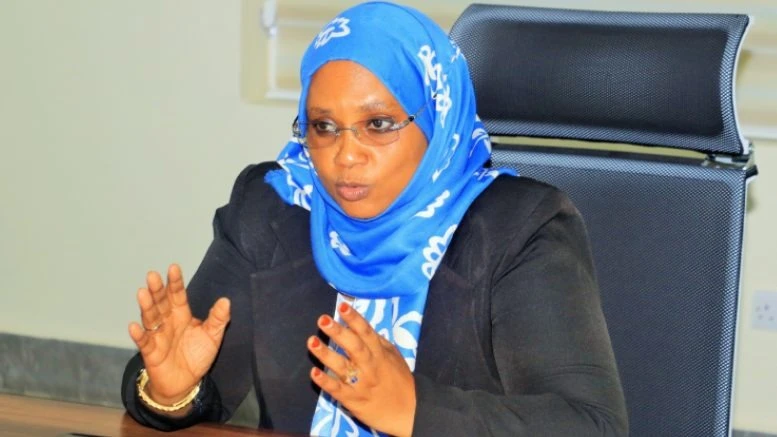
Dr Ashatu Kijaji, Minister of Natural Resources and Tourism said that during the Financial Year 2025/2026, the programme has facilitated commercial beekeeping training for 236 groups with a total of 4,934 beekeepers nationwide.
According to the minister, the training also featured 50 carpenters who were trained on construction of modern beehives in the district councils of Itigi, Singida, Manyoni, Kaliua, Sikonge, Korogwe and Urambo. Similarly, 9,215 modern beehives have been provided to beekeepers through the programme.
“This program has kicked-off by overseeing the construction of a beekeeping value-added factory in Kaliua district of Tabora region which has now been completed by 40 percent,” said Dr. Kijaji.
Dr. Kijaji said this programme will enhance confidence already created in the international markets for Tanzanian honey and wax as she pointed out the African Continental Free Trade Area (AfCFTA0 as among the key targeted markets.
She said Tanzanian honey has continued to meet an average of 97 percent of international standards for three consecutive years, which has increased opportunities for foreign markets such as the United States, European Union countries, the United Arab Emirates and China.
The Minister said as the result of this programme among others the volume of honey exported has increased from 951.6 tons in 2024 to 1,596.8 tons in 2025, equivalent to an increase of 67.85 percent. Meanwhile, the value of honey exports has increased from 11.4bn/- in 2024 to 19.2bn/- in 2025, equivalent to an increase of 68.4 percent.
“This success is attributed to this programme alongside other initiatives made by the government to streamline the beekeeping sector by supporting beekeepers to increase honey quality and productivity,” said Dr. Kijaji.
Dr. Kijaji asserted that the ten-year programme comes to complement the implementation of the National Development Vision 2050 (DIRA 2050) which recognizes beekeeping as a key agricultural and forestry asset.
“DIRA 2050 advocates for structural transformation, pushing the sector away from traditional, low-yield harvesting methods toward modernized, commercialized, and climate-resilient practices to boost GDP and rural livelihoods,” said Dr. Kijaji.
The programme comes at a time when beekeepers in rural Tanzania are generating handsome profits from honey and wax trading. Success stories are evident from Tabora to Kigoma regions as women provide for their families from money earned from selling honey.
When Anastasia Michael, a 35-year-old mother of three from Mkola village in Sikonge, Tabora, inherited a 12-acre plot from her father-in-law in 2018, she had no idea it would one day anchor her family’s economic transformation.
Alongside her husband, she ventured into commercial beekeeping, setting up 293 modern beehives on their land. Six years later, thanks to government-backed reforms and the emergence of honey-processing industries in the region, Anastasia is among a growing number of Tanzanian women turning honey into gold.
“Before 2023, the honey market was very limited,” Anastasia recalls. “Now, thanks to government awareness campaigns and investments in bee product production, everything has changed;
The district councils also support us through ten percent loans, giving us both capital and access to markets,” she said.
In 2022, Anastasia and 85 other villagers benefited from training coordinated by the Tabora Beekeeping Training Institute (BTI), which she says changed their approach to bee keeping. The results were almost immediate.
“In the 2024/25 season, I harvested 76 twenty-litre buckets of honey, up from 32 the previous year,” she said. “I sell one litre at 10,000/- retail and 9,000/- wholesale.” That season brought her earnings to 14.34m/-, the highest she’s ever recorded.
Prior to the BTI training and use of its honey processing facility, the couple earned a maximum of 3.5m/- per season.
“Our income has grown so much that we’ve started building a modern house,” Anastasia adds proudly. She sells 70 percent of her honey to the Sikonge honey Processing Industry and the remainder through her shop and online platforms.
Not far from her farm, fellow Mkola resident Karim Sengo, 37, also shares in the success story. With 176 hives spread across 6.5 acres, he harvested 37 buckets last season, earning an average of 6.7m/-.
“The training from BTI helped us adopt modern methods of beekeeping that meet both local and international standards,” he said.
“Since the government invested in honey processing plants, the business has become far more profitable.” The momentum isn’t just local.
BTI Vice-Chancellor Mohamed Wawa notes that over two million Tanzanians are now employed across the beekeeping value chain. However, he warns that a lack of technical knowledge continues to threaten the sector’s full potential.
“To address this, we’ve signed MoUs with beekeepers in Tabora’s districts to provide production knowledge and technical support,” he said adding; “We also let them use our processing unit to produce honey that meets export standards. This has doubled their output.”
In Mubondo, Kasulu district in Kigoma, 43-year-old beekeeper Jonathan Kiza tends 472 hives on a sunflower-planted 13-acre farm. In the last season, he harvested 85 buckets, each fetching about 103,000/-, bringing in a substantial income.
“We were a forgotten sector, but President Dr. Samia Suluhu Hassan remembered us,” he says gratefully.
His gratitude to President Samia resonates with Article 8 (1) (b) of the Constitution of the United Republic of Tanzania 1977 which specifically highlights the primary responsibility of the government as being to safeguard the people’s welfare.
However, Kiza’s optimism is echoed by Elias Lubimbi, a trainer at Mubondo Agriculture Training Institute.
“Today, the market is no longer a challenge—demand is strong. We’ve launched campaigns to encourage beekeepers to scale up.”
Further north, the Frankfurt Zoological Society’s Tanzania chapter is blending conservation and commerce. Project Coordinator Veronica Mtoka explains that for over eight years, they’ve trained communities near Serengeti national Park in sustainable beekeeping practices.
“Beekeeping doesn’t harm the environment and fits perfectly with climate resilience,” she says. “Mobilizing communities around it builds sustainable livelihoods.”
According to the Ministry of Natural Resources and Tourism budget speech for Financial Year 2024/25, eight medium and large-scale honey processing industries have been constructed between April 2021 and April 2025, in Tabora, Kigoma, Singida, Iringa, Katavi and Geita. Prior to 2021, Tanzania had only one such facility.
Tanzania ranks second in honey production in Africa after Ethiopia and 14th globally. By April 2025, Tanzania had exported 1,321.35 tonnes of honey worth 15.86bn/-, up from 430.61 tonnes worth 5.17bn/- in 2020/21—a growth of 207 percent.
During the year under review, the Tanzania Forests Services Agency (TFS) alone harvested 22.5 tonnes of honey and 0.9 tonnes of beeswax, valued at 282mn/-, from its 222 apiaries and three special farms.
It distributed 1,059 bee hives and tested 132 honey samples in international labs to prepare for expanded export markets. The speech noted that 11,236 hectares in Tanzania Mainland is set aside for beekeeping—a start toward the national goal of 114,000 hectares by 2031.
Globally, the value of bees cannot be overstated. The Food and Agriculture Organization of the United Nations (FAO) estimates their absence could cost the world up to US$577 billion in lost crop production annually.
Nearly 90 percent of flowering plants and 75 percent of major food crops rely on pollinators like bees. According to FAO’s 2025 World Bee Day statement, global honey production stood at 1.894 million tonnes last year, with Africa now contributing 12 percent—or 223,000 tonnes—making it the fastest-growing region in the industry.
Back home, the Industry and Trade Ministry budget for 2024/25 stated that since 2021 the beekeeping sector has created 103,195 jobs as of April 2025.
These achievements were realized by the establishment of 554 new industries, the revival of 148, and the expansion of 208—totaling 910 industries.
According to a research paper dubbed ‘Assessment of Beekeeping as an Adaptation Strategy to Climate Change in Iramba District’ published in the Journal of the Open University of Tanzania 2020, beekeeping serves as a vital economic lifeline and climate adaptation strategy in Iramba district.
It notes that as erratic weather has caused severe declines in traditional rain-fed crops like maize and sunflower, many farmers have shifted to beekeeping because it provides a reliable, drought-resistant income stream that is less vulnerable to climate variability.
The research conducted across Iramba district in Singida region particularly in the villages of Kyalosangi, Galangala, Mdonkolo, and Songambele highlights specific outcomes and challenges regarding this apiculture shift.
Findings showed that about 77 percent of respondents faced decreases in maize productivity over a 30-year period, pushing roughly 33.1 percent of farmers to heavily adopt beekeeping as an income-generating alternative to land tilling.
“Modern top-bar and frame hives yield an average of 10 to 15 liters of honey per hive, whereas traditional log/bark hives produce about 5 to 10 liters,” reads the research paper.
The finding showed that beekeeping has helped diversify household finances, reducing the over-reliance on rain-fed agriculture and providing an essential safety net when traditional crops fail.
“Despite its massive potential, smallholder beekeepers in the district face hurdles like a heavy reliance on traditional hives, poor integration of modern apiculture technologies, and limited technical skills;
Academic assessments of the area recommend increasing capacity-building programs, improving access to modern equipment, and providing financial support to optimize bee product yields and ensure sustainable livelihoods,” researchers recommend in the paper.
Tanzania’s remarkable rise as one of Africa’s leading honey producers has earned it a prestigious continental honour: an invitation to host the 5th Africa Beekeeping Expo in 2028.
The invitation was extended by Africa Bee Expo Chairman Fatah Ben Chouia during a meeting with Tanzania’s Ambassador to Algeria, Mobhare Matinyi, at the Tanzanian Embassy in Algiers on June 03, 2026.
Top Headlines
Trending Stories















© 2026 IPPMEDIA.COM. ALL RIGHTS RESERVED