




Cash still dominating tourism activity payments in Tanzania

Despite the government efforts to promote cashless economy, cash still dominates tourism activities payments in Tanzania, even as the sector expands and modernises, according to findings from the Visitors Exit Survey by the Bank of Tanzania (BoT) and the National Bureau of Statistics (NBS).
The 2026/27 national budget marks one of the strongest policy shifts yet toward a cash-lite and digitally integrated economy, with the government introducing measures that will significantly expand the use of electronic payments across key sectors of the economy.
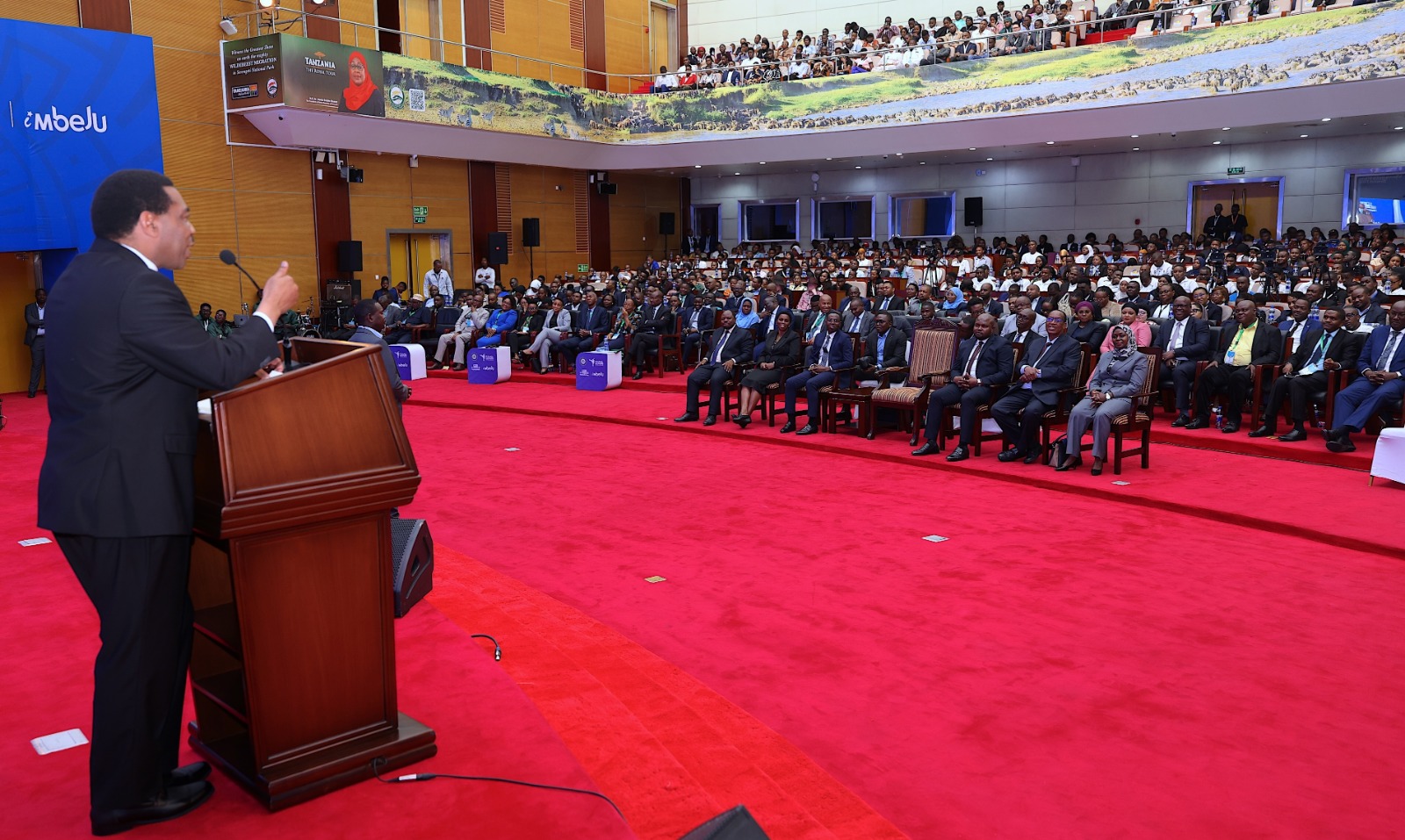
Presenting the budget in Parliament, the Finance Minister Khamis Mussa Omar said the reforms are designed to deepen digital transformation and improve efficiency in transactions, noting that the government is moving to reduce cash dependence and strengthen transparency in financial flows.
A central feature of the budget is the mandatory use of digital payment systems in selected sectors from July 2026, covering areas such as transport services, hospitality, education, real estate transactions, and government-related payments.
The tourism survey shows that cash remains the primary mode of payment among visitors in both mainland Tanzania and Zanzibar, followed by credit and debit cards.
Alternative payment methods, including mobile money and bank transfers, remain marginal, highlighting a gradual transition toward cashless systems despite broader digitalisation trends in the economy.
Against this backdrop of largely cash-based transactions, Tanzania’s tourism industry in 2025 is also undergoing a broader structural transformation, shaped by what official data describes as “curated enhancements in hospitality, conservation, and cultural offerings.”
The data points to a sector that is not only recovering and expanding in revenue terms but also evolving in structure, visitor behaviour, and destination competitiveness.
At the centre of this transformation is the strengthening of the visitor experience across multiple dimensions—from human hospitality to ecosystem management.
The survey notes that “enhanced hospitality training programs and community-led initiatives created even warmer welcomes,” contributing to deeper cultural engagement and stronger destination loyalty.
This qualitative improvement is increasingly reflected in visitor behaviour, particularly repeat visitation patterns.
The report indicates that repeat visitors rose to 48 percent in 2025, compared to a three-year average of 42 percent, a shift linked to “lasting positive impressions [that] inspired return trips.”
This rise in repeat visitation is significant for Tanzania, where tourism strategy has long aimed to move beyond one-off safari trips toward sustained destination loyalty.
The BoT and NBS findings suggest that improvements in service culture, conservation management, and experiential tourism are beginning to deliver measurable behavioural outcomes.
Wildlife and beach tourism—the two pillars of Tanzania’s global appeal—also recorded notable upgrades.
The survey highlights “strengthened anti-poaching efforts, upgraded national park facilities, and new eco-friendly viewing points,” which collectively improved wildlife viewing experiences and reinforced Tanzania’s position in high-value eco-tourism markets.
Similarly, coastal and marine destinations, particularly in Zanzibar, benefited from targeted environmental management.
The report cites “sustainable management and cleanup campaigns” that improved the quality of “pristine white sand beaches in Zanzibar and along the coast,” strengthening destination image and competitiveness.
Complementing this, the rise of farm-to-table dining experiences and culinary festivals has expanded Tanzania’s tourism offering beyond traditional wildlife circuits.
The survey notes that the “promotion of diverse, natural local foods through farm-to-table experiences and culinary festivals elevated its prominence,” signalling the growing importance of gastronomy in destination branding.
Digital influence is also increasing, though it remains secondary to traditional channels.
The survey observes that “internet and social media are among the upcoming sources of information about Tanzania,” reflecting a gradual shift in how potential visitors discover destinations.
However, travel intermediaries remain dominant. “Travel agents and tour operators have steadily grown and became the most important source, accounting for about half of respondents from 2024 to 2025,” the report states.
While “information from friends and relatives declined over time,” it “remained a significant source,” underscoring the continued importance of word-of-mouth influence in travel decisions.
From a macroeconomic perspective, tourism earnings recorded strong growth in 2025. According to the BoT and NBS, “tourism earning increased by 13 percent to US$ 4,410.6m/- in 2025, from US$3,903.1m/- in 2024.”
The performance was driven mainly by increased international arrivals and higher average spending per visitor.
The report further notes that “US$4,233.5m/- was earned from tourists who came for leisure and holidays, accounting for 95.9 percent of total earnings,” underscoring the dominance of leisure tourism.
Business tourism remains small, contributing only US$ 42.2m/-, reinforcing the country’s reliance on leisure travel.
Additionally, “about 75.2 percent of total earnings were received from visitors who came under the package tour arrangement,” showing the continued importance of tour operators in packaging Tanzania’s tourism products.
Zanzibar continues to emerge as a key growth driver within the national tourism landscape.
Earnings for the archipelago rose by 19.3 percent to US$1,190.8m/- in 2025, up from US$997.8mn/- in 2024, supported by a 9 percent increase in arrivals to 654,880 visitors.
As in the mainland, leisure tourism dominated earnings, with US$1,188.91m/- generated from holidaymakers.
However, the share of package tourism declined slightly to 59.1 percent from 63.6 percent, suggesting gradual diversification in booking behaviour and a rise in independent travel.
Beyond domestic performance, the BoT and NBS survey places Tanzania within a broader global tourism recovery.
It notes that “the number of global tourists fully recovered in 2025, with international tourist arrivals rising by 4 percent to about 1.52bn, surpassing pre-pandemic levels.”
This recovery has been supported by improved air connectivity, eased visa regimes, and resilient demand across major regions, particularly Africa, Asia, and the Pacific.
Globally, tourism receipts are estimated at around USD 1.9tn, underscoring the sector’s continued importance in global services trade.
However, the report also warns of risks that could shape future growth, noting that the outlook for 2026 depends on “continued recovery in Asia and the Pacific, stable global economic conditions, easing inflationary pressures, and absence of significant escalation in geopolitical conflicts.”
Domestic infrastructure investment is also playing a key role in supporting tourism expansion.
The survey highlights ongoing upgrades in airports, roads, and airstrips, including developments in Ngorongoro, Ruaha, Mikumi, Serengeti, and Lake Manyara, as well as the nearing completion of the new Dodoma International Airport at Msalato and expansion works at Zanzibar’s airport.
These investments aim to improve “passenger amenities, cleanliness, and operational efficiency,” while expanding access to remote tourist destinations.
At the same time, government efforts to promote private sector participation in accommodation development and strengthen social services in tourism-dependent regions are increasingly seen as part of a broader inclusive growth strategy.
The survey notes sustained investment in education, healthcare, and transport infrastructure to ensure tourism “delivers broader societal benefits.”
Taken together, the BoT and NBS Visitors Exit Survey presents a tourism sector that is expanding in revenue terms while also maturing in structure and visitor experience.
The combination of improved hospitality, stronger conservation outcomes, diversified tourism products, and sustained infrastructure investment is gradually repositioning Tanzania as a higher-value destination.
Top Headlines
Trending Stories


















© 2026 IPPMEDIA.COM. ALL RIGHTS RESERVED